
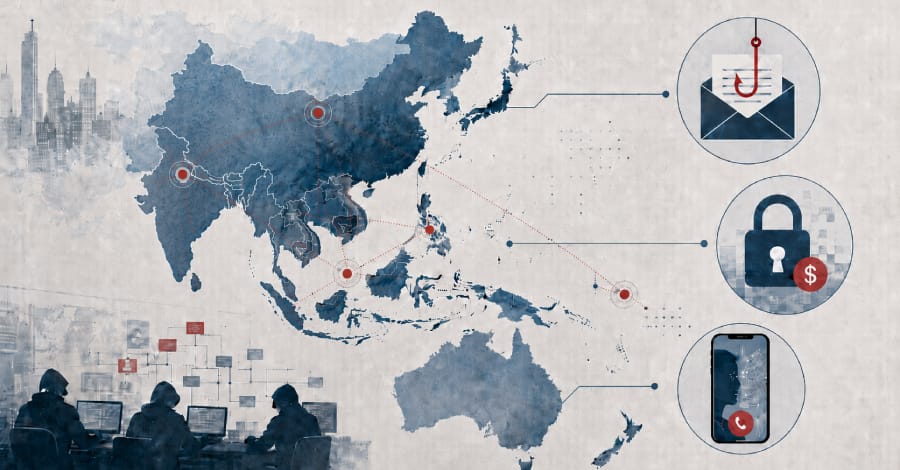
A new report from INTERPOL has revealed a significant surge in cybercrime across Asia and the South Pacific, fueled by rapid digital transformation, expanding internet access, emerging technologies, and increasingly sophisticated criminal networks.
According to INTERPOL’s 2025/2026 Asia and South Pacific Cyberthreat Assessment Report, phishing remains the most widespread and financially damaging cyber threat in the region. Between January 2024 and March 2025, nearly one-third of participating countries reported more than 10,000 phishing incidents. More than half of INTERPOL member nations also indicated that cybercrime now accounts for at least 30% of all crimes recorded nationally.
Cybercriminals Leveraging AI and Advanced Tactics
INTERPOL’s Cybercrime Director, Neal Jetton, highlighted the growing complexity of the threat landscape, noting that cybercriminals are increasingly using artificial intelligence, ransomware-as-a-service (RaaS) platforms, and advanced social engineering techniques to conduct attacks at scale.
As digital adoption continues to accelerate across the region, cybersecurity experts emphasize the importance of stronger collaboration, intelligence sharing, and resilience measures to safeguard individuals, businesses, and critical infrastructure.
Ransomware Attacks Continue to Escalate
The report estimates that the Asia-Pacific region experienced more than 135,000 ransomware-related attacks in 2024. Industries most affected included:
- Real Estate
- Manufacturing
- Financial Services
Cybercriminal groups are also exploiting organizations’ regulatory and compliance obligations to increase pressure during extortion campaigns, making ransomware incidents even more damaging.
AI-Driven Fraud and Deepfake Scams on the Rise
One of the most concerning developments identified in the report is the growing use of artificial intelligence and deepfake technology in fraud schemes.
Cybercriminals are increasingly impersonating company executives through AI-generated voice and video content to authorize fraudulent transactions. Deepfake technology is also being used in sexual exploitation, blackmail, and coercion campaigns.
INTERPOL highlighted that organized crime groups operating in Myanmar, Cambodia, and Laos have incorporated deepfakes into romance and investment scams, contributing to an estimated $37 billion in cybercrime-related losses across the region.
Organized Crime Syndicates Expanding Scam Operations
The report points to the industrialization of cyber-enabled scams by transnational organized crime networks in countries such as:
- Cambodia
- Laos
- Myanmar
- Philippines
These criminal organizations reportedly operate large-scale scam compounds, often relying on forced labor to carry out fraudulent investment schemes and romance scams targeting victims worldwide.
Key Cybersecurity Trends Identified in the Report
INTERPOL’s assessment uncovered several alarming trends shaping the regional cyber threat landscape:
Banking Trojans and Information Stealers Remain Widespread
Banking trojans and credential-stealing malware ranked as the second most common cyber threat category. The most frequently observed malware families included:
- RedLine
- Lumma
- LokiBot
- Negasteal
- ZBot
Phishing Click Rates Exceed Global Average
The Asia-Pacific region recorded approximately 5.5 phishing-link clicks per 1,000 users each month, nearly double the global average of 2.9 clicks per 1,000 users.
DDoS Attacks Surge
Distributed Denial-of-Service (DDoS) attacks increased by 92% in 2024 compared to the previous year, highlighting the growing threat to online services and critical infrastructure.
System Intrusions Drive Data Breaches
System intrusions were responsible for nearly 80% of all reported data breaches in 2024, with attackers frequently exploiting:
- Misconfigured systems
- Weak encryption practices
- Insecure APIs
- Insufficient network monitoring
Law Enforcement Strengthening Cybercrime Response
To address these growing threats, law enforcement agencies across Asia and the South Pacific are expanding collaborative efforts with INTERPOL. Ongoing initiatives include:
- Joint operations targeting cybercriminal infrastructure
- Cross-border investigations
- Specialized cybercrime training programs
- Development of policies to strengthen cyber resilience
As cyber threats continue to evolve, INTERPOL stresses that international cooperation and proactive cybersecurity measures will be critical in combating the next generation of digital crime.
