
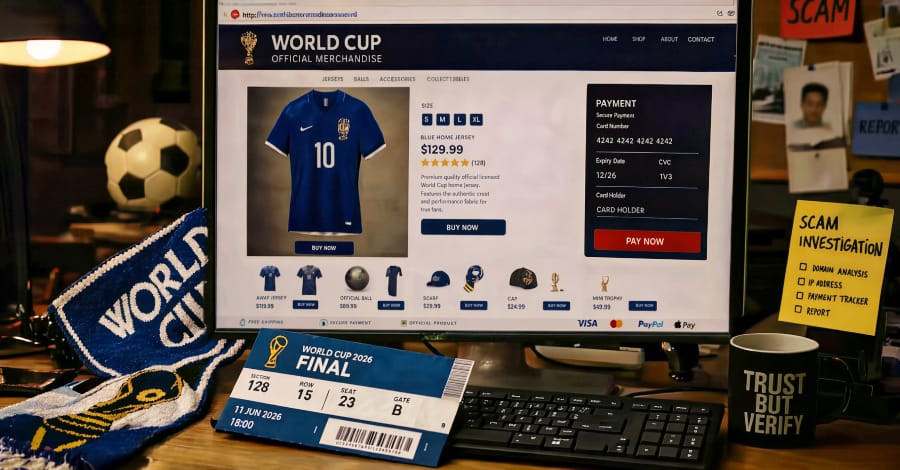
With the FIFA World Cup 2026 just around the corner, cybersecurity researchers and law enforcement agencies are warning fans about a sharp rise in online scams designed to exploit the excitement surrounding the tournament.
Experts have uncovered thousands of fake FIFA-related websites, phishing campaigns, malware-infected streaming applications, and fraudulent social media accounts aimed at stealing money, login credentials, and personal information from unsuspecting fans.
Why the World Cup Is a Prime Target
The FIFA World Cup 2026 is expected to attract more than six million spectators across 16 host cities in the United States, Canada, and Mexico. Demand for tickets has already reached unprecedented levels, with FIFA reportedly receiving over 150 million ticket requests within the first two weeks of sales.
The combination of limited ticket availability, high fan demand, and large financial transactions creates the perfect environment for cybercriminals to operate.
Thousands of Fake FIFA Websites Discovered
Cybersecurity firm Group-IB has identified more than 4,300 fraudulent FIFA-themed domains registered since August 2025. Researchers linked over 300 of these websites to a financially motivated group known as “GHOST STADIUM.”
The attackers have created convincing replicas of FIFA’s official website, including login pages that closely mimic FIFA’s legitimate authentication system. By copying genuine website elements and hosting images directly from FIFA servers, the fake pages appear highly authentic to visitors.
Victims who enter their credentials risk losing access to their FIFA accounts, allowing attackers to hijack accounts and potentially resell tickets associated with them.
Researchers found that many users are directed to these fraudulent websites through Facebook advertisements, Telegram channels, WhatsApp messages, and manipulated search results.
Cryptocurrency Payments Raise Red Flags
The scam websites often offer multiple payment methods, including credit cards, money-transfer services, regional payment processors, and cryptocurrency.
Security experts emphasize that FIFA’s official ticketing system does not accept cryptocurrency payments. Any ticket seller requesting crypto should be treated as suspicious and potentially fraudulent.
Group-IB estimates that premium ticket and hospitality-related fraud could account for tens or even hundreds of millions of dollars in losses, although the exact figures remain unconfirmed.
Fake Merchandise, Betting Sites, and Streaming Platforms
Ticket scams are only one part of a much larger fraud ecosystem.
Researchers have identified counterfeit merchandise stores, fake betting platforms, and fraudulent streaming services targeting football fans. Many of these operations collect sensitive information such as passport copies, selfies, and identity documents, which can later be used for identity theft.
Some fake streaming services charge subscription fees and then install malware on users’ devices, giving attackers remote access to personal data and financial accounts.
Security companies have also reported lottery scams claiming that recipients have won FIFA-related prizes worth millions of dollars.
Banking Malware Hidden Inside Streaming Apps
Fans searching for free match streams face additional risks.
Threat intelligence researchers have observed a growing number of unofficial streaming applications masquerading as popular sports-streaming platforms. Many of these apps contain Android banking malware designed to steal credentials and drain bank accounts.
Security firms have linked several of these applications to banking trojans known as Massiv and Perseus.
Once installed, the malware can:
- Overlay fake login screens on banking applications
- Capture usernames and passwords
- Intercept one-time authentication codes
- Monitor user activity
- Remotely control infected devices
Some variants are even capable of scanning note-taking applications for saved passwords and cryptocurrency recovery phrases.
One of the clearest warning signs is a streaming application requesting Android accessibility permissions without a legitimate reason.
Social Media Scams Continue to Grow
Social media platforms remain a major distribution channel for World Cup-related fraud.
Researchers have detected numerous advertising campaigns promoting counterfeit jerseys, fake collectibles, phishing pages, and fraudulent ticket offers. Thousands of fake FIFA-themed social media profiles have also been identified across major platforms.
In addition, cybercriminals are using fake FIFA job postings and recruitment campaigns to lure victims into entering their login credentials on counterfeit websites.
Stolen Credentials Already Circulating Online
Security researchers have discovered large collections of FIFA-related login credentials in databases compiled by credential-stealing malware.
Malware families such as Vidar, LummaC2, and RedLine have been linked to the theft of hundreds of thousands of user credentials and thousands of FIFA-related web addresses.
These stolen credentials can be used to take over accounts, purchase tickets fraudulently, or conduct additional phishing attacks.
Public Wi-Fi Creates Additional Risks
Fans traveling to host cities should also exercise caution when using public wireless networks.
Recent security assessments found that a significant percentage of public Wi-Fi networks remain unsecured or use outdated configurations that can be exploited by attackers.
Cybercriminals often create “evil twin” hotspots that imitate legitimate public networks, allowing them to intercept user traffic and collect sensitive information.
Experts recommend using mobile data whenever possible and avoiding access to banking, email, or other sensitive accounts while connected to public Wi-Fi.
How Fans Can Stay Safe
Security professionals recommend several simple precautions for World Cup fans:
- Purchase tickets only through FIFA’s official website.
- Manually type website addresses instead of clicking links in ads or messages.
- Enable multi-factor authentication on FIFA accounts.
- Avoid sellers requesting cryptocurrency payments.
- Download apps only from trusted app stores.
- Be cautious of streaming applications requesting unnecessary permissions.
- Avoid logging into financial accounts over public Wi-Fi networks.
- Verify social media accounts before making purchases or sharing information.
The Threat Is Far From Over
Despite ongoing efforts by technology companies and law enforcement agencies, researchers believe the largest wave of scams may still be ahead.
Thousands of FIFA-themed domains remain registered but inactive, ready to be activated during peak demand periods. With phishing kits, automated bots, and fraud tools widely available online, cybercriminals are expected to intensify their operations throughout the tournament.
As interest in tickets, travel, accommodations, and streaming reaches its peak, fans should remain vigilant and verify every transaction before sharing personal or financial information online.
